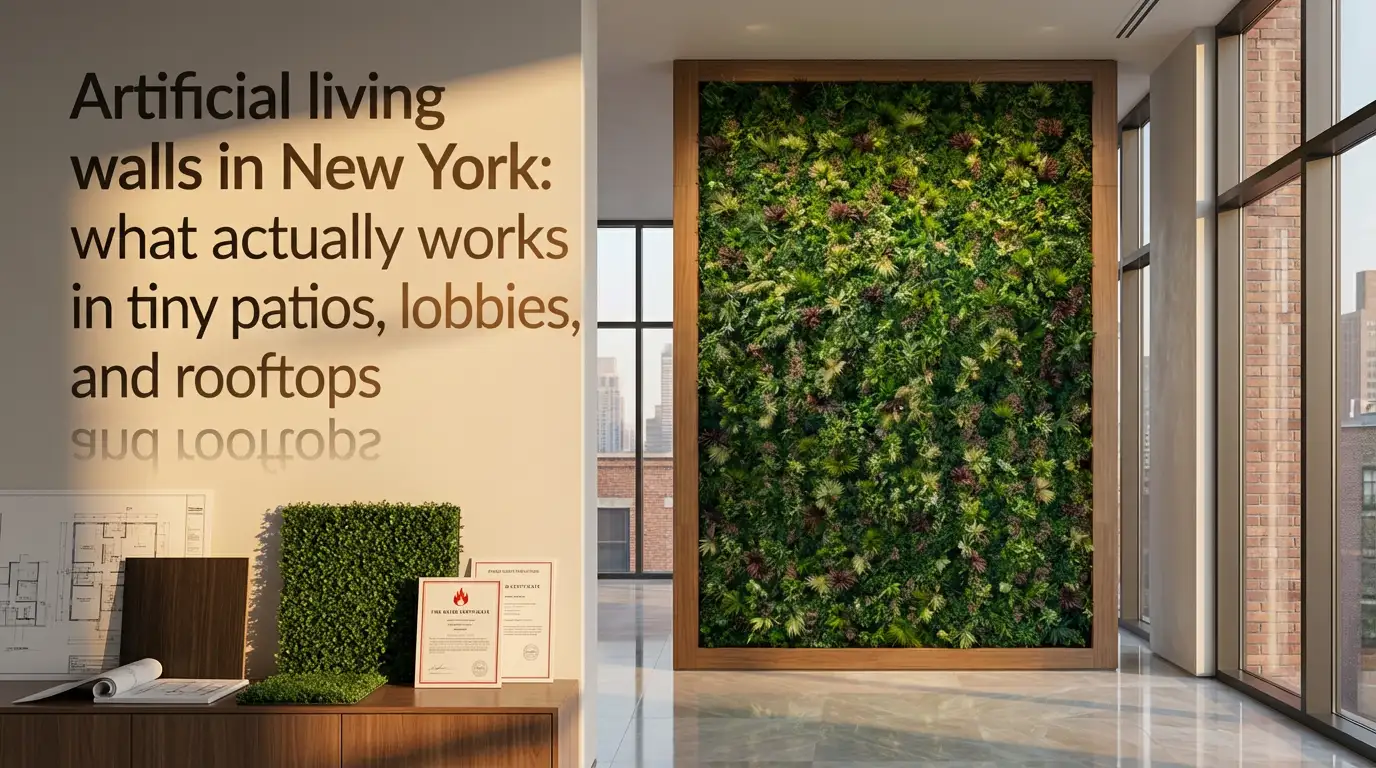
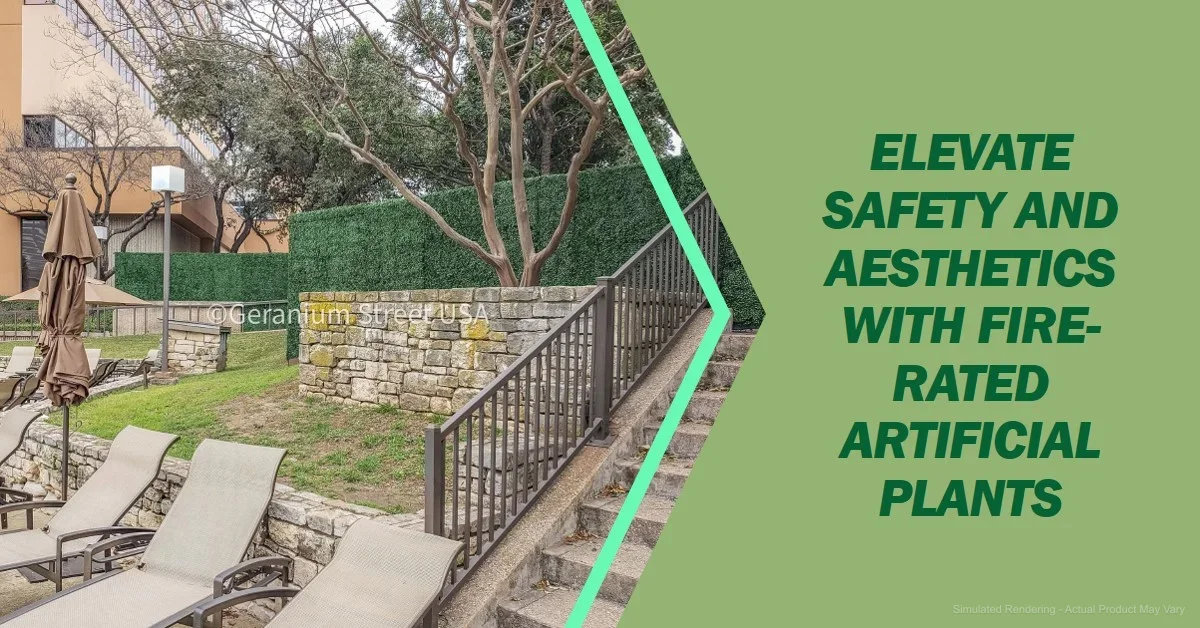
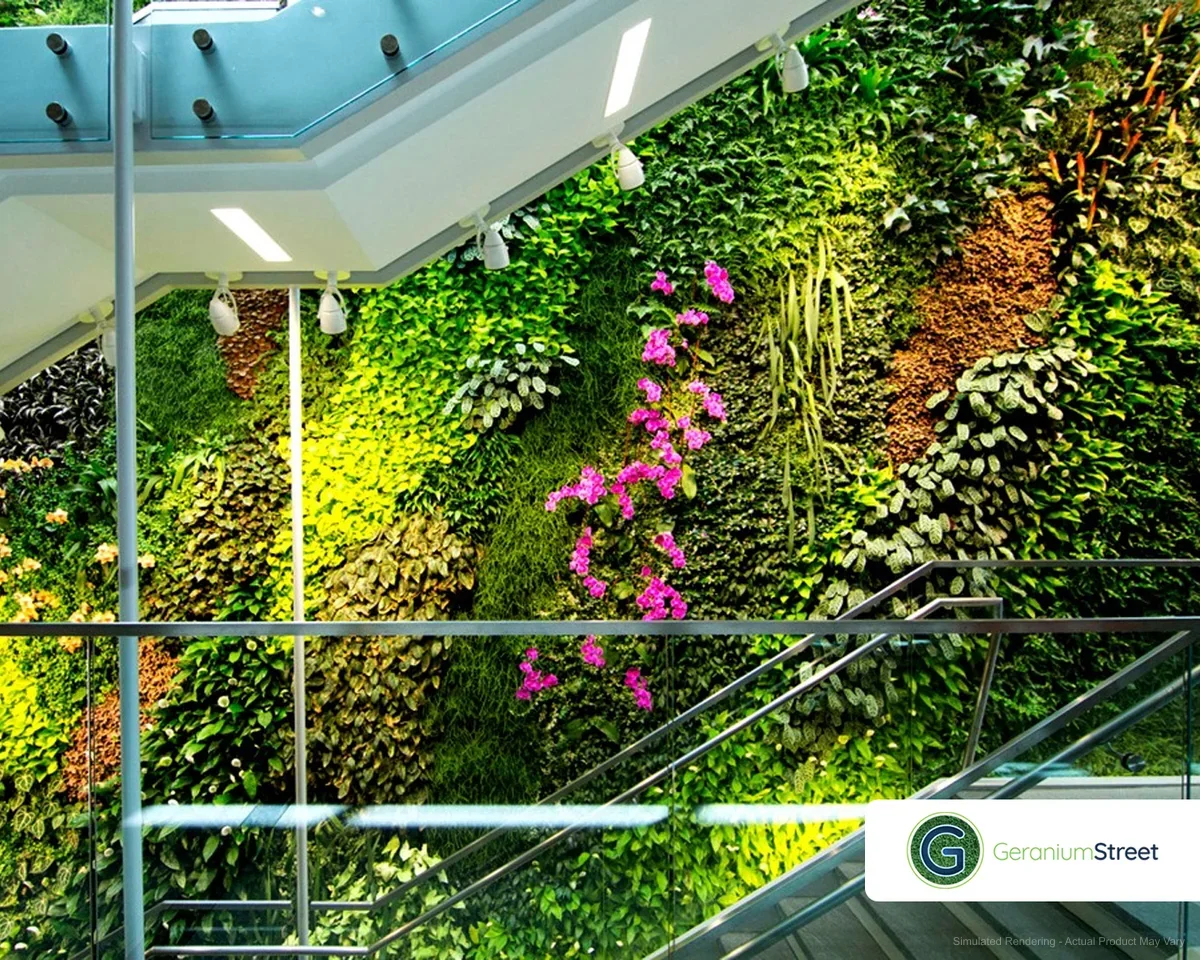
If you’ve ever tried to keep a real vine wall alive through a Chicago winter (or even a windy shoulder season), you know how it goes: our weather doesn’t care about your Pinterest board. That’s why more homeowners, restaurants, and property managers are looking at Artificial living walls and Artificial hedges in Chicago—not as a “fake plant” shortcut, but as a clean, practical finish that stays dense, tidy, and photo-ready without irrigation lines, plant replacement, or spring replanting.
This guide focuses on what actually matters in Chicago: where these installs make sense (inside and out), what materials hold up to lakefront wind and freeze/thaw, when fire-rated living walls are worth the extra cost, and how to plan an install that looks intentional—not like a weekend craft project. If you’re in West Loop, Wicker Park, or Lincoln Park, you’ll recognize a few examples that match the types of buildings and outdoor spaces we deal with here.
1) The artificial greenery scene in Chicago is bigger than you think
Chicago’s design culture is hands-on and picky. People notice details. That’s true in residential courtyards, and it’s even more true in commercial spaces where guests are standing 18 inches from your “green wall” waiting for a table.
A few patterns we keep seeing around the city:
In dense neighborhoods like the West Loop, a lot of “outdoor” space is really semi-outdoor: rooftop decks, terraces, balcony runs, and patios tucked between brick walls. Those spots can be rough for live plants because the sun is either intense and reflective or missing entirely, and wind funnels between buildings. Artificial living walls and faux hedges work well there because you can put greenery exactly where you want it—full coverage on day one—without trying to train vines into cooperating.
In areas like Wicker Park and Logan Square, there’s steady demand for privacy screening that doesn’t turn into a constant trimming project. A typical Chicago yard or rear patio is narrow, and neighbors are close. A custom artificial hedge along a fence line (or as a topper) gives you height and density without that “half-bare in April” look a lot of real hedges end up with after winter.
And downtown, especially around corridors that feed into spots near Millennium Park or along Michigan Avenue, commercial interiors often want greenery that photographs well year-round. Some of those projects also need fire-rated options, depending on the venue type, how the greenery is mounted, and what the local inspector asks to see.
One Chicago-specific note: because the city has such a big hospitality and event scene, greenery has to hold up under conditions that beat up live plants—high traffic, coat-season scuffs, constant cleaning, and lighting that’s nice for people but not for plants. Artificial living walls and artificial hedge panels are usually more predictable in those environments.
2) Why Chicago residents choose artificial living walls and artificial hedges
Most people don’t start out wanting “artificial.” They start out wanting an outcome: more privacy, a better-looking fence, a focal wall behind a bar, a softer feel in a condo entry, or greenery on a rooftop where running a hose isn’t realistic.
You get reliable coverage—right away
If you’ve tried to grow a real privacy screen in Illinois, you know it’s not quick. Even fast growers take time to fill in, and winter can knock them back. With a custom artificial living wall, you decide the density up front. You can go tight and uniform (clean and modern) or choose a mixed botanical wall with more texture and depth. Either way, it looks finished the day it goes up.
Low-maintenance matters more here than people admit
Chicago’s seasons don’t let you coast. Spring cleanup, summer storms, fall leaf drop, then winter. If you own a two-flat or manage a small building, it’s not that live plants are impossible—it’s that nobody wants another recurring task that looks terrible if you ignore it for two weeks. Artificial living walls and fake hedges (the good kind—dense, realistic texture, UV-stabilized) reduce: And yes, there’s still some upkeep.
They’re a smart answer for tricky surfaces
Chicago buildings have character, but they aren’t always easy to work with: brick, CMU, metal railings, and older fences that aren’t perfectly plumb. A qualified project team can mount hedge panels and living wall panels so they read clean even on imperfect substrates. And in narrow gangways or small patios, artificial hedges can work like a finish layer that hides the ugly stuff—patchy fence boards, mismatched repairs, conduit runs—without rebuilding the whole structure.
Commercial spaces often need fire-rated materials
If you’re a restaurant owner, a hotel, a coworking operator, or you’re building out a lobby feature, fire code requirements can come up fast. That’s where “it looks nice” stops being enough. When a product is described as NFPA 701 Method 2 certified, it means it passed a National Fire Protection Association test for flame propagation on textiles and films (Method 2 is commonly used for heavier materials). That certification may be required for certain interior decorative installs.
3) What to look for in a Chicago product supplier (so it doesn’t look cheap in six months)
A living wall or hedge can look premium or painfully plastic. Most of the time, it comes down to three things: material quality, mounting, and whether the design makes sense for the space.
Start with panel density and leaf texture
If you’re shopping artificial hedge panels or faux living walls, ask two direct questions: How dense is it in person? And what does it look like from 2 feet away? Chicago patios and rooftops are social spaces. People will be close to the greenery. A good panel has layered leaves, varied tones of green, and a backing that doesn’t scream “grid” when sunlight hits it.
UV-stabilized for outdoor installs (even in Chicago)
It’s easy to think UV is only a Sun Belt issue. But Chicago gets strong summer sun, plus reflections off light-colored walls, glass, and rooftop surfaces. If the hedge or wall is going outdoors—especially on a south- or west-facing exposure—go with UV-stabilized materials. UV stabilization is a treatment that slows fading and brittleness from sunlight.
Fire-rated is about paperwork as much as performance
If you need a fire rated living wall (or fire-rated hedge) for a commercial interior, don’t accept vague reassurance. Ask for documentation that specifically says NFPA 701 Method 2 certified for the exact product you’re buying. Also ask what’s included: Is it the plant material only? Does it include the backing? If you’re adding extra substrate layers, signage, or lighting, those pieces may come with their own requirements.
Installation method: clean edges are the whole game
Most “bad” installs aren’t bad because of the greenery. They look bad because of edges, seams, and corners. In a Chicago yard, fence runs are long and straight, so wavy seams jump out. In a condo lobby, lighting is deliberate, so shadows and gaps jump out. A product supplier who does product configuration should be able to talk through:
Don’t skip the “what’s behind it” conversation
Artificial greenery often gets installed over surfaces that already have problems—old wood, spalling masonry, rusting metal. In Chicago, freeze/thaw cycles punish weak substrates. Greenery shouldn’t be used to cover a structural issue. A solid product supplier will call out:
4) Chicago-specific considerations (wind, winter, and how the install survives)
Chicago weather is the real client on outdoor projects. Here’s what tends to matter most.
Freeze/thaw and moisture management
If you’re mounting to exterior masonry or a fence that holds moisture, avoid creating a trapped wet zone. That can lead to staining, rot, or faster wear. A good approach is to: If your wall backs up to conditioned interior space (heated), think about condensation points too. This is where a quick site check pays off.
Lakefront wind and rooftop uplift
If you’re near the lakefront, or you’re installing on a roof deck in neighborhoods like Streeterville or West Loop, wind load isn’t theoretical. Big panel surfaces act like sails. This is where “DIY with a staple gun” stops being funny. Outdoor installs should be mechanically fastened in a way that matches the substrate (wood fence, steel, masonry) and the exposure. For freestanding hedges, weighted bases and connection hardware matter.
Salt, grime, and city dust
Between winter salt and general urban dust, outdoor greenery in Chicago gets dirty faster than people expect. The fix is easy, but plan for it. If your hedge runs along a sidewalk-facing fence near a busy street (think corridors not far off W Madison St or other high-traffic routes), expect to rinse it now and then. Most homeowners do a gentle rinse in spring and again mid-summer.
Sun angles between buildings
Chicago’s alleyways, courtyards, and narrow side yards create weird sun patterns. You might get two hours of intense sun and then shade all day. For artificial greenery, that matters because: If you can, look at the wall at the same time of day you actually use the space. That’s when you’ll notice whether you want a tighter boxwood look or a more varied mixed wall that hides shadows.
A quick word on local numbers
Chicago is big enough that small design choices get tested quickly. The city had 2.6 million residents as of the 2020 U.S. Census, which is a neat way of saying: if your space is guest-facing, somebody’s taking photos there. That’s why finish details—edges, density, realistic texture—often matter more in Chicago than in places where greenery is mostly viewed from across a yard.
5) Getting started with artificial living walls and artificial hedges in Chicago
If you want this to go smoothly, treat it like a small build—not a decor purchase.
Start by picking the purpose: privacy, a backdrop, a brand moment, or just covering an ugly surface. Purpose decides height, density, and whether you want a uniform hedge or a mixed botanical wall.
Then measure your area in simple rectangles. Most hedge panel systems are modular. A common planning mistake is forgetting returns and edges. If your fence run is 18 feet long and you want the hedge to wrap the corner 2 feet, your real coverage is bigger than the “front view” suggests.
After that, decide indoor vs outdoor specs. Outdoors in Chicago usually means UV-stabilized materials and exterior-rated fastening. Indoors—especially commercial—may mean NFPA 701 Method 2 certified products for fire-rated installs. If you’re unsure what your building needs, ask early so you’re not redesigning after you’ve ordered materials.
If you want a cleaner, built-in look, plan on a custom artificial living wall instead of off-the-shelf panels. Custom lets you control the plant mix, depth, and negative space so it fits your wall size exactly.
Geranium Street can help with product configuration planning and product selection for Chicago projects, whether you’re fitting out a condo terrace, a restaurant wall, or a backyard fence line. We usually start with photos, rough measurements, and a couple of inspiration references so we can recommend a build that matches how you actually use the space.
FAQ
How much do artificial living walls and artificial hedges cost in Chicago?
It depends on material density, whether you’re using a standard panel system or a custom living wall, and how tricky the mounting surface is. For commercial spaces, fire-rated requirements can also narrow your product options. If you share dimensions and a couple of site photos, you can usually get to a realistic budget range pretty quickly.
Do I need fire-rated artificial living walls in Chicago?
Sometimes. Many commercial interiors choose NFPA 701 Method 2 certified products because inspectors, landlords, or insurers may ask for it. For residential installs, it’s less common. Fire ratings apply to specific products, and requirements vary by use case.
Will outdoor hedge panels fade in Chicago sun?
They can over time, especially on south- and west-facing exposures or reflective rooftop settings. That’s why UV-stabilized materials are worth it outdoors. They’re not “sun-proof,” but they hold color longer.
Can artificial hedges go on an old wood fence?
Often, yes—but the fence has to be solid. If posts are leaning or boards are soft, fix that first. Wind load plus freeze/thaw can turn a weak fence into a recurring repair job.
How do you keep an artificial hedge looking clean after winter?
Plan on a spring rinse to knock off salt dust and grime. A gentle hose rinse and a soft brush usually does the job. Skip harsh chemicals unless the manufacturer recommends them.
Conclusion: a Chicago-ready way to get privacy and greenery without the plant drama
If you want year-round greenery that doesn’t collapse after a deep freeze or look thin by April, Artificial living walls and Artificial hedges Chicago IL projects can be a practical, design-forward choice. The best results come from matching the material to your exposure (sun, wind, winter) and treating install details—seams, edges, fasteners—like finish carpentry.
If you’re planning a hedge wall in Lincoln Park, a rooftop privacy screen in West Loop, or a commercial interior that may need fire-rated living walls, Geranium Street can help you sort through product options and the install approach. Send your measurements, a few photos, and your goal for the space, and we’ll tell you what we’d do—and what we’d avoid—before you order anything.