Freestanding Boxwood Hedges: Where They Work, Where They Don’t, and How to Plan a Layout
Learn where freestanding boxwood hedges work, what stability questions to ask, and how to lay out a screen for real use.
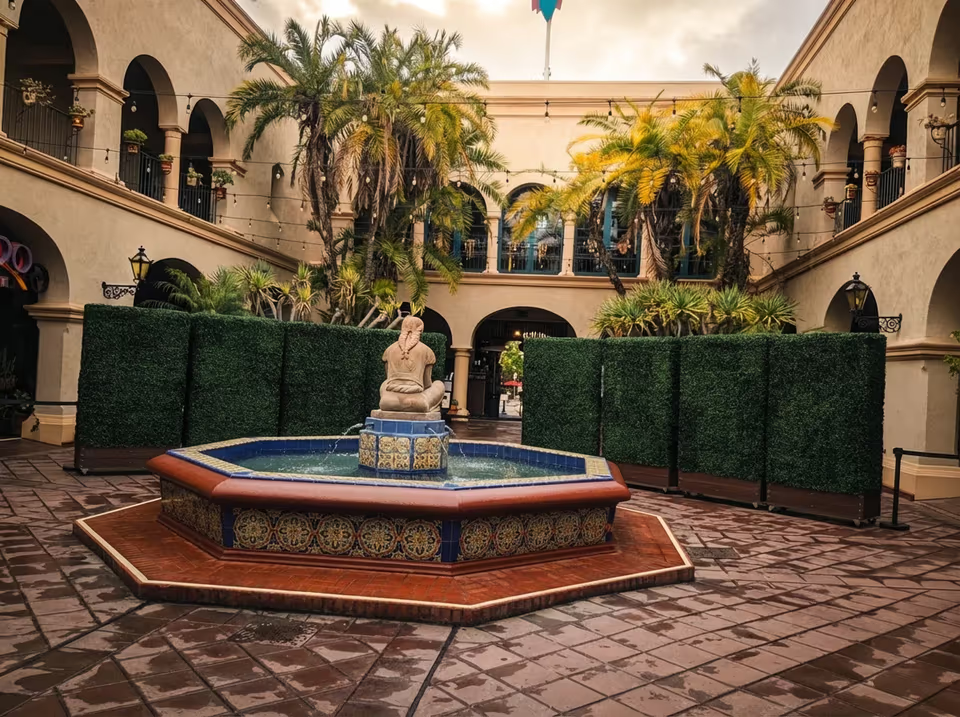
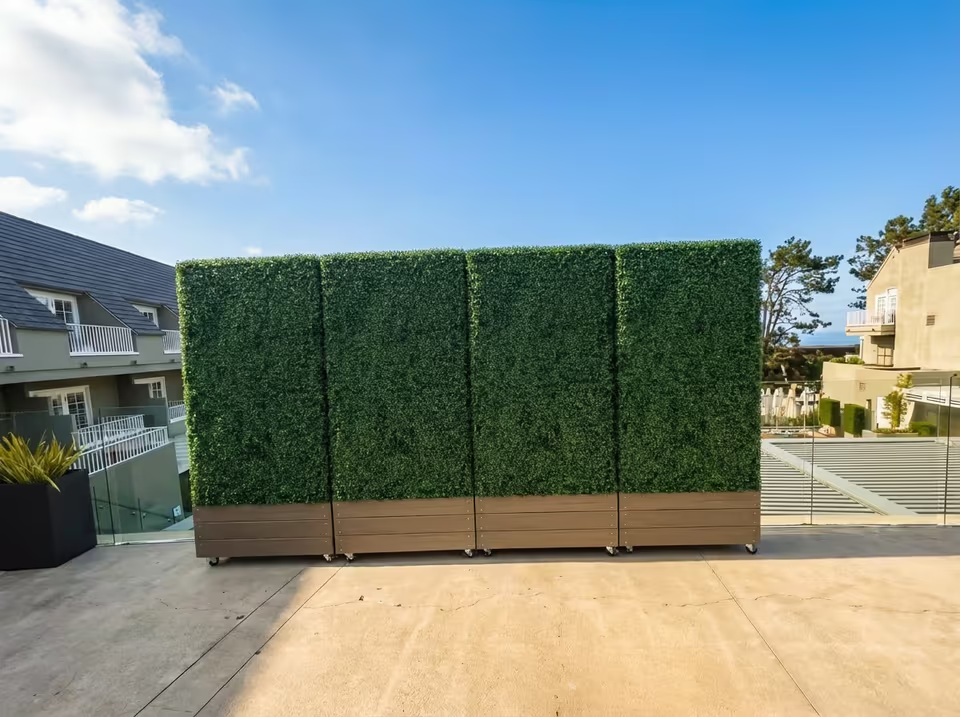
A freestanding boxwood hedge can divide an outdoor dining area, define a lobby zone, soften an open terrace, or create a privacy screen where there is no wall to cover. It is not the right solution for every open, exposed, or long boundary. The difference is in the layout: support, footprint, visibility from both sides, movement around the screen, and the conditions it will face.
The layout also decides the product. A framed or freestanding hedge carries its own structure, while an artificial boxwood mat is the flexible interlocking format used when there is already a surface to tile.
Where freestanding screens make sense
Freestanding hedge screens work well when the project needs a flexible visual boundary rather than a permanent building element. Think of a patio seating zone, a hospitality entry condition, a temporary-feeling but durable division in a commercial common area, or a rooftop where a low-impact screen is being planned around existing circulation.
They are especially useful when a finished surface needs to read well from more than one side. That changes the planning: the screen is an object in the space, not a facing applied to a wall.
Where a different approach is better
A freestanding hedge is not a substitute for a structural privacy wall. A highly wind-exposed location, an uncontained property boundary, or a place where the screen will be climbed, pushed, or hit by carts needs a project-specific support conversation. In some cases, a mounted hedge system or a purpose-built frame is the more responsible direction.
Do not choose a freestanding format simply to avoid planning the support. Make the base and stability question part of the first review.
Lay out the screen from circulation first
Sketch where people enter, pass, sit, and stop. Leave clear paths to doors, emergency routes, service areas, and maintenance access. Then place the screen where it supports a real use: blocking a direct view, framing a seating zone, or dividing a larger room into more comfortable areas. Measure the screen from the occupied side and check its appearance from the reverse side as well.
A sequence of freestanding units needs a consistent rhythm. Align faces, plan where the run terminates, and decide whether planters, frames, or other components are part of the visual language. Avoid a layout that creates a random obstacle course.
Freestanding layout checklist
- Identify the privacy, wayfinding, or zone-definition job.
- Mark pedestrian, service, and egress paths.
- Confirm base, support, and exposure conditions.
- Review both sides of the screen and its endpoints.
- Separate permanent screening needs from event-rental needs.
Keep rental and installed-project intent separate
A project screen and an event backdrop solve different problems. Geranium Street’s permanent product conversation begins with the layout, product, and site conditions. Event-only needs belong with a dedicated rental solution rather than being forced into a permanent-installation specification. That distinction keeps the buyer on the right path and prevents a simple event need from becoming an overbuilt project brief.
Move from layout to product review
Review the artificial boxwood hedge system options alongside the broader hedge panel range. A real example of a commercial hedge use case is available in the Del Mar hotel project. When you have the run, intended height, a photo of the location, and a description of the support condition, use the quote request to start a project review.
Questions buyers ask
Can boxwood hedges be freestanding?
Freestanding arrangements can be reviewed for an appropriate project, but the base, stability, dimensions, and exposure must be considered with the actual site.
How should a freestanding hedge screen be placed?
Start with circulation and the view it needs to block or frame. Confirm access and clear routes before deciding the final run.
Are freestanding hedges suitable for every outdoor location?
No. Open exposure and stability requirements can make a mounted or purpose-built solution more appropriate. Review the actual location before committing.
Project planning note: Product selection, mounting approach, dimensions, and site conditions should be reviewed against the actual location.