Living Walls for Healthcare
In healthcare, biophilic design does more than decorate. Peer-reviewed research links views of nature with lower patient anxiety and perceived pain. Artificial living walls offer a visual connection to greenery without soil or standing water.
From $18/sq ftLiving walls, single foliage
Starting material rate, before delivery and installation; quoted per project.
In short.
Biophilic design for calmer patient spaces: a visual connection to greenery, with no soil or standing water and fire documentation for review.
- Fire documentation
- NFPA 701Method 2 documentation for applicable configurations; the authority having jurisdiction decides.
- Soil or standing water
- 0No soil, no standing water, no organic matter.
- Surfaces
- Wipe-cleanNon-porous; confirm disinfectants with your infection prevention team.
- Design
- CustomA design per facility.
Why healthcare facilities choose us.
Artificial living walls avoid several challenges live plants bring to healthcare environments.
-
The need: Live plants bring soil, standing water, and organic matter.
What works: No soil or standing water
No soil, no standing water, no organic matter. Artificial living walls help avoid the mold and soil-borne concerns that make live plants problematic in clinical settings. Review materials and cleaning protocols with your infection prevention team.
-
The need: Surfaces your team can wipe down.
What works: Cleanable surfaces
Panels can be wiped down. Confirm which disinfectants suit the exact product with your infection prevention team.
-
The need: Some of the most stringent fire codes.
What works: Fire documentation for review
Healthcare occupancies face some of the most stringent fire codes. Vallum FRX has NFPA 701 Method 2 documentation for applicable configurations. The documentation supports review; final acceptance rests with the authority having jurisdiction (AHJ).
-
The need: A design rationale your documentation can reference.
What works: Research background
Biophilic design in healthcare draws on decades of research (Ulrich, 1984; Kellert, 2005). Facilities pursuing WELL Building Standard, Planetree, or Magnet designation can reference biophilic design in their documentation.
Evidence-based biophilic design.
The research, the trouble with live plants in clinical spaces, and what artificial walls offer instead.
Ulrich’s 1984 study, and the research since.
Roger Ulrich’s landmark 1984 study demonstrated that patients with views of nature recovered faster, required less pain medication, and had shorter hospital stays. Later research has explored similar effects in other healthcare settings.
Live plants can bring pathogens, water, and upkeep.
The challenge: Live plants in clinical environments can introduce soil-borne pathogens, require irrigation that risks water damage, and demand maintenance resources many facilities would rather spend elsewhere.
Artificial walls offer the visual side, without soil or irrigation.
The solution: High-fidelity artificial living walls offer the visual side of biophilic design—texture, color, depth, organic pattern—without soil or irrigation.
Healthcare applications.
Every patient touchpoint is a chance to make the space feel calmer. There is no healthcare installation to show yet, so each photo is the nearest real situation, captioned for what it is.
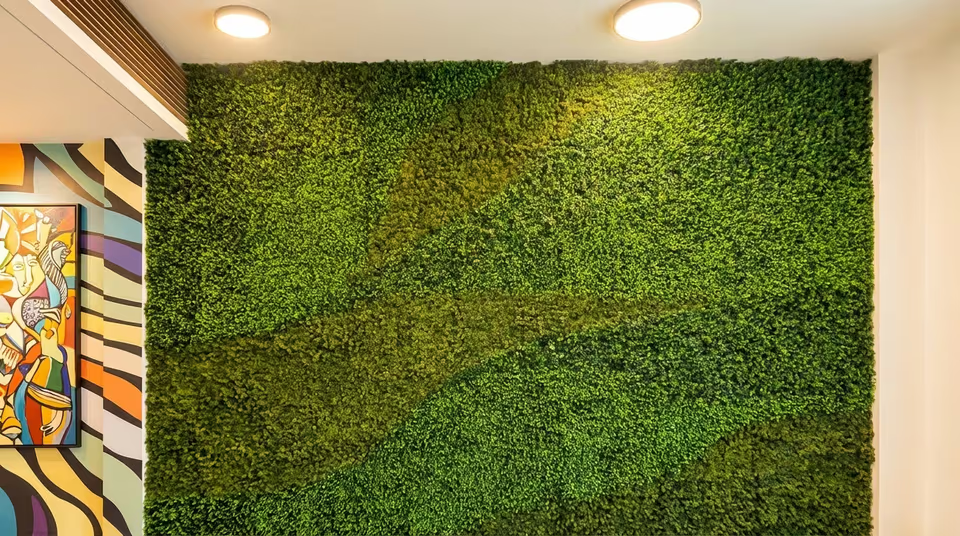
Waiting rooms & lobbies
A calming focal point while patients wait.
Shown: the nearest true situation, an interior living wall of three foliage styles in a Santa Monica mall food court.
Santa Monica project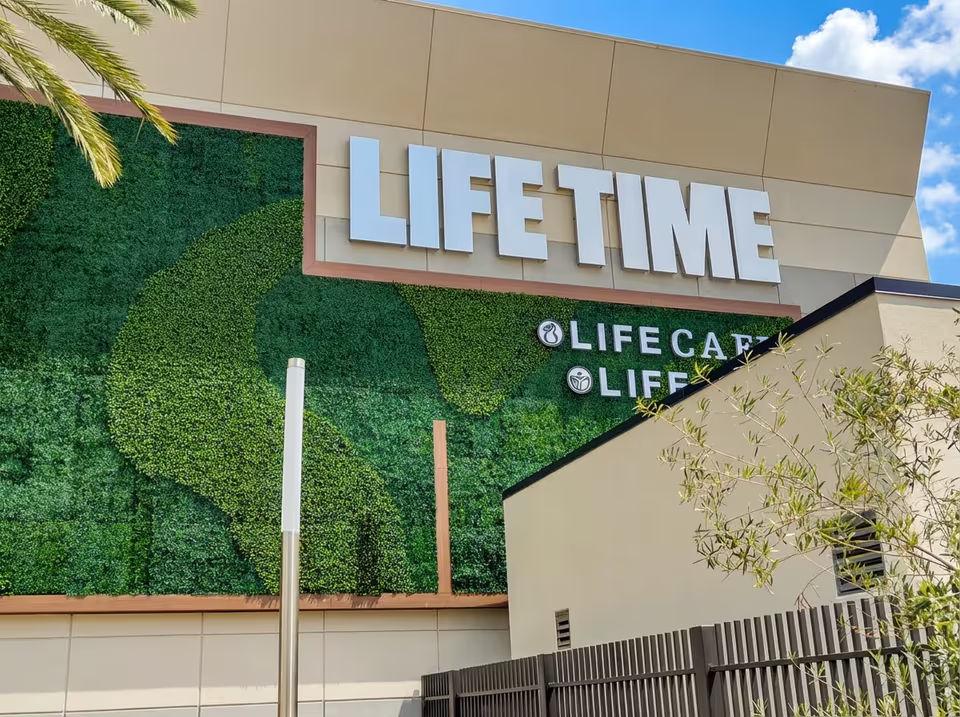
Wellness centers & spas
A therapeutic atmosphere from the moment patients enter the space.
Shown: the nearest true situation, a 163 × 23 ft living wall at the main entrance of an athletic club, Lifetime Irvine, Irvine, CA.
Lifetime Irvine project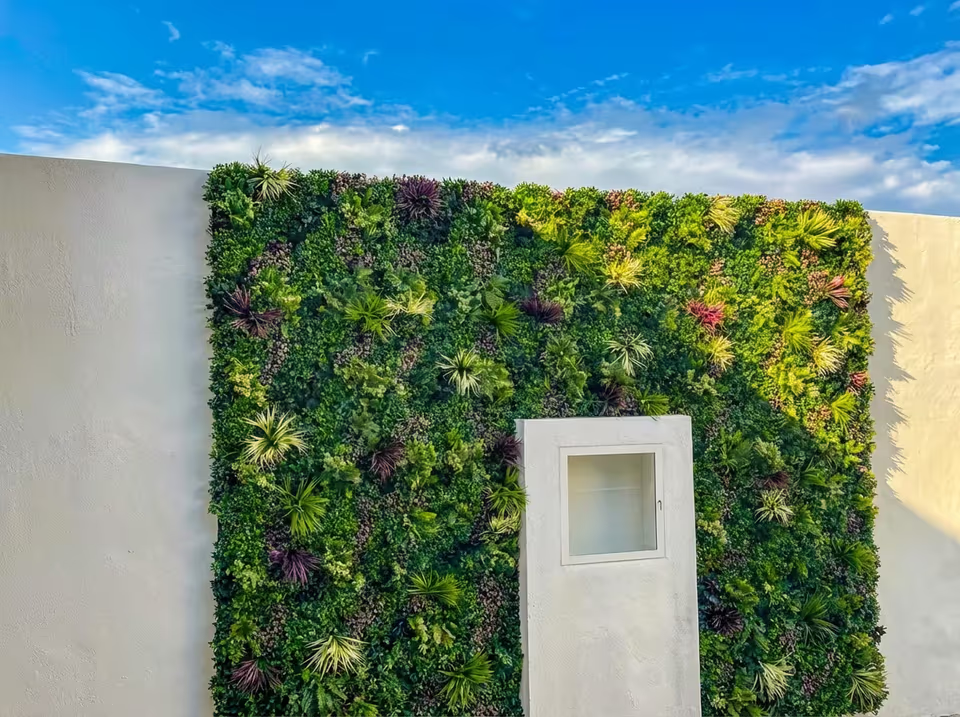
Healing gardens & courtyards
Year-round greenery for courtyard walls, with exterior configurations confirmed per project.
Shown: the nearest true situation, 200 sq ft of Vallum FRX on the courtyard wall of a multi-family building, Los Angeles, CA.
LA multi-family projectAll six applications, in detail
Waiting Rooms & Lobbies
Patient waiting areas are high-anxiety environments. A living wall gives patients a calming focal point while they wait.
Treatment & Recovery Rooms
Infusion centers, dialysis suites, and post-op recovery rooms benefit from biophilic views. Many patients and visitors respond well to views of greenery.
Staff Break Rooms
Healthcare worker burnout is a systemic crisis. Living walls in staff lounges and break rooms can create a more restorative place to reset for the people who support patients.
Wellness Centers & Spas
Medical spas, physical therapy centers, and integrative wellness facilities use living walls to establish therapeutic atmosphere from the moment patients enter the space.
Assisted Living & Memory Care
Greenery can make common areas and corridors feel calmer and more familiar. Living walls add it without soil or watering.
Healing Gardens & Courtyards
Hospital courtyards and healing garden walls benefit from year-round greenery. Exterior configurations are confirmed per project, with sun exposure and attachment reviewed for the site.
Design for Healing
Share your facility plans and we will provide a custom biophilic design proposal, complete with evidence-based rationale and fire documentation, with timing confirmed for the project.