Hedge Buyer's Guide
Decide when a hedge system is the right route, which hedge product families fit the job, and when a simple browse should become a privacy-planning or quote-led conversation.
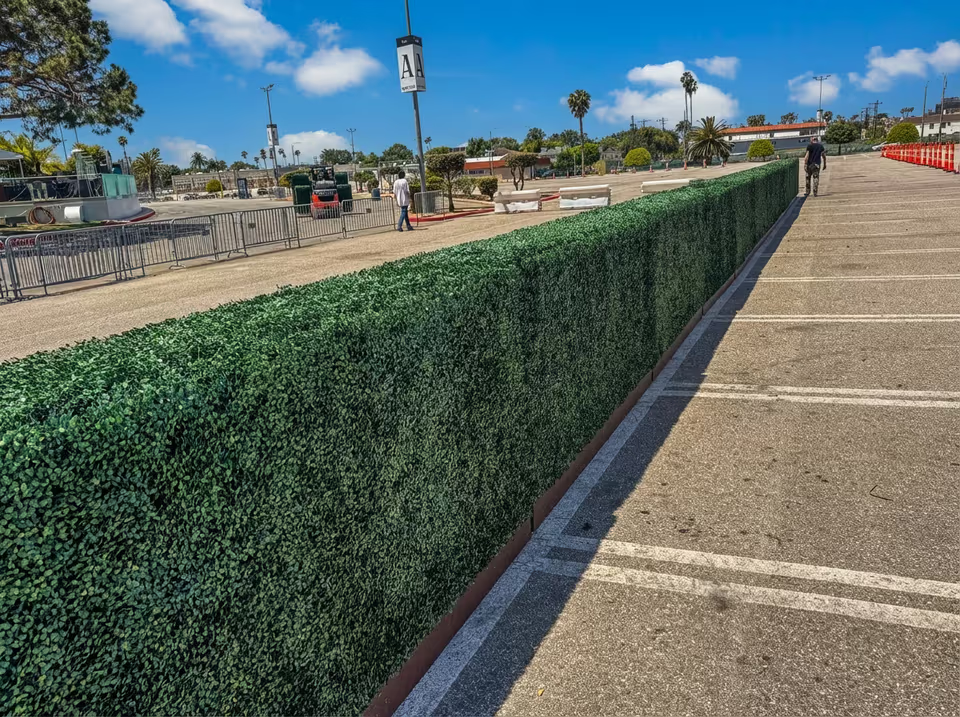
Who this guide is for
This guide helps buyers who are trying to solve a screening, privacy, or barrier problem, not just add greenery for decoration.
The three routes it compares are artificial hedge panels for framed and freestanding screening, fence covering for an existing structure, and the boxwood hedge mat for tiling a surface panel by panel.
- Residential buyers who need privacy quickly without waiting for live hedge growth.
- Commercial and hospitality teams using hedge systems for barriers, patio screening, or guest-facing separation.
- Fence and railing projects where the existing structure stays but needs coverage or added height.
- Buyers comparing fixed-price hedge products with quote-based custom installs.
When hedge systems are the right path
Hedges tend to win when the job is about privacy, screening, crowd flow, barrier softening, or fence improvement rather than decorative wall impact alone.
- Choose hedge systems for privacy and screening: Hedge routes are usually better when the project needs to block views, define space, soften barriers, or create a stronger edge around seating.
- Do not default to hedges when the wall is mainly decorative: If the application is a wall-led decorative feature, a living wall route may be more useful.
- Use hedge routes when the structure and the sightline matter together: Fence coverage, topper work, freestanding barriers, and patio divider jobs all depend on how the hedge interacts with an existing structure.
Choose panels, fence coverage, toppers, or a custom route
A hedge buyer usually gets more clarity by first choosing the route than by comparing product names in isolation.
| Route | Use this when | Next step |
|---|---|---|
| Fixed-price hedge panels | You already know the product family and the layout is straightforward enough to browse products directly. | Hedges |
| Fence covering or topper planning | The existing fence is staying in place and the real decision is whether you need full-face coverage or added height. | Fence Covering Hedge Toppers |
| Custom hedge installation | The hedge line is irregular, the privacy requirements are more involved, or the project needs a more engineered solution. | Request a Product Quote |
Product families that shape the hedge decision
Hedge product pages are most helpful when they clarify whether the job is general screening, documentation-sensitive, privacy-first, or more custom than it first appears.
- Boxwood Hedge Mat UV Rated: A strong general-purpose hedge path for privacy, screening, and outdoor greenery with a classic boxwood look.
- Boxwood Hedge Mat Fire Rated: A stronger path when the project needs documentation tied to the exact material being considered.
- Green Leaf Privacy Foliage: A useful privacy-first option when screening is the main requirement rather than a mixed-foliage effect.
- Boxwood Flex Hedge: A better route for irregular hedge lines, custom fits, or applications where a more flexible hedge system is needed.
- Boxwood Dragon Mat: A hedge product with more textured visual finish for projects wanting a different leaf pattern than standard boxwood.
When documentation matters on hedge projects
Documentation is most helpful when it is tied to the actual product being specified. That becomes more important when the hedge is part of hospitality, venue, commercial, or event-facing work.
- Documentation questions tend to come up most often on hospitality, venue, commercial, and event-facing hedge work.
- The right request is always tied to the exact hedge product being considered, not just the fact that the project uses artificial greenery.
- If documentation is a known requirement from the start, the quote path is often safer than a simple browse-and-buy purchase.
If documentation is part of the brief, compare the fire-rated hedge product path and the fire-safety guide before committing to the final product list.
Projects that support the hedge route in practice
These project pages help compare hospitality, residential, and commercial hedge uses without relying on generic proof language.
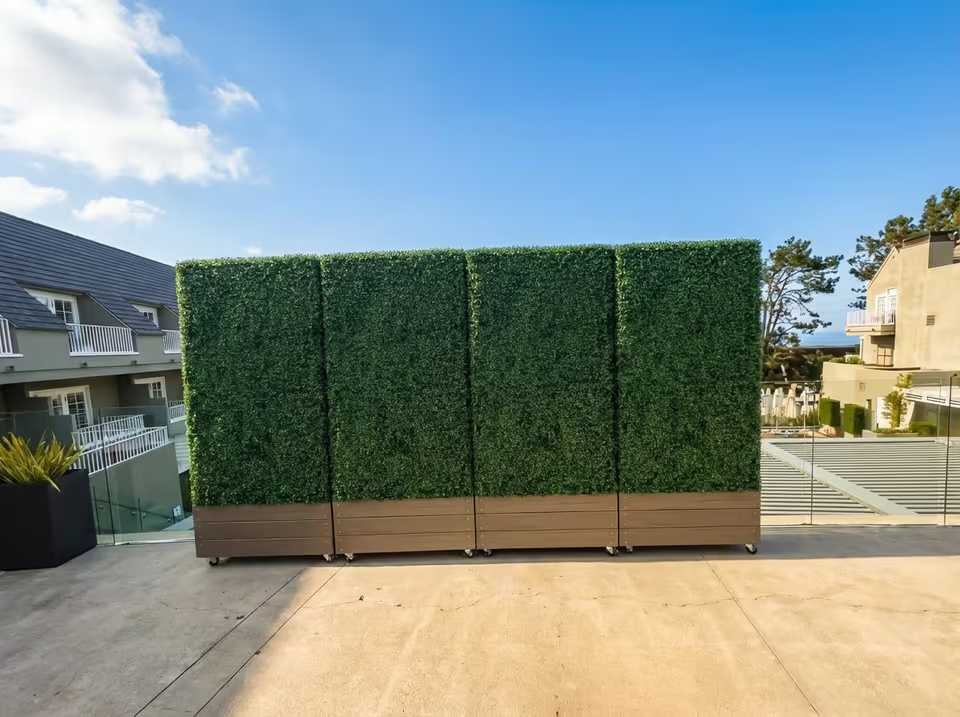
Frequently Asked Questions
Who should use a hedge route instead of a living wall route?
Use a hedge route when the main requirement is privacy, screening, fence coverage, topper work, or barrier logic. Use a living wall route when the application is mainly decorative and wall-led.
How do I decide between hedge panels, fence covering, and toppers?
Start with the structure. If you need a straightforward hedge product, browse panels. If the fence stays and needs full-face coverage, use the fence-covering route. If the fence face is acceptable and only the height is the problem, use hedge toppers.
When should I request a quote instead of browsing products?
Use the quote path when the hedge run is irregular, the privacy goals are more custom, the install conditions are unusual, or documentation questions affect the recommendation.
When does documentation matter on a hedge project?
Documentation matters when the reviewing party wants product-specific support for the exact hedge material being specified. That usually shows up on commercial, hospitality, venue, and event-facing work.
Can hedge systems be decorative as well as private?
Yes. Many hedge projects improve both privacy and appearance at the same time, but the strongest reason to choose a hedge route is usually the screening requirement rather than purely decorative wall design.
Should I choose boxwood or ivy foliage for a hedge?
Choose boxwood when privacy is the main goal or the screen needs to look manicured: its small, uniform leaves form a dense, structured surface for privacy screens, fence covering, and formal or commercial settings. Ivy has varied leaf sizes and a softer, cascading look that suits accent walls, trellises, and irregular surfaces where a less formal appearance is wanted.